
There was a time when surgery meant one thing.
The doctor had to be in the room.
That rule just broke.
A surgeon recently performed a procedure from over 1,500 miles away, controlling robotic instruments with precision so tight it matched what could be done standing over the patient.
No dramatic countdown. No global broadcast.
Just a quiet moment where reality shifted.
How Surgery Became Something You Don’t Have to Be There For
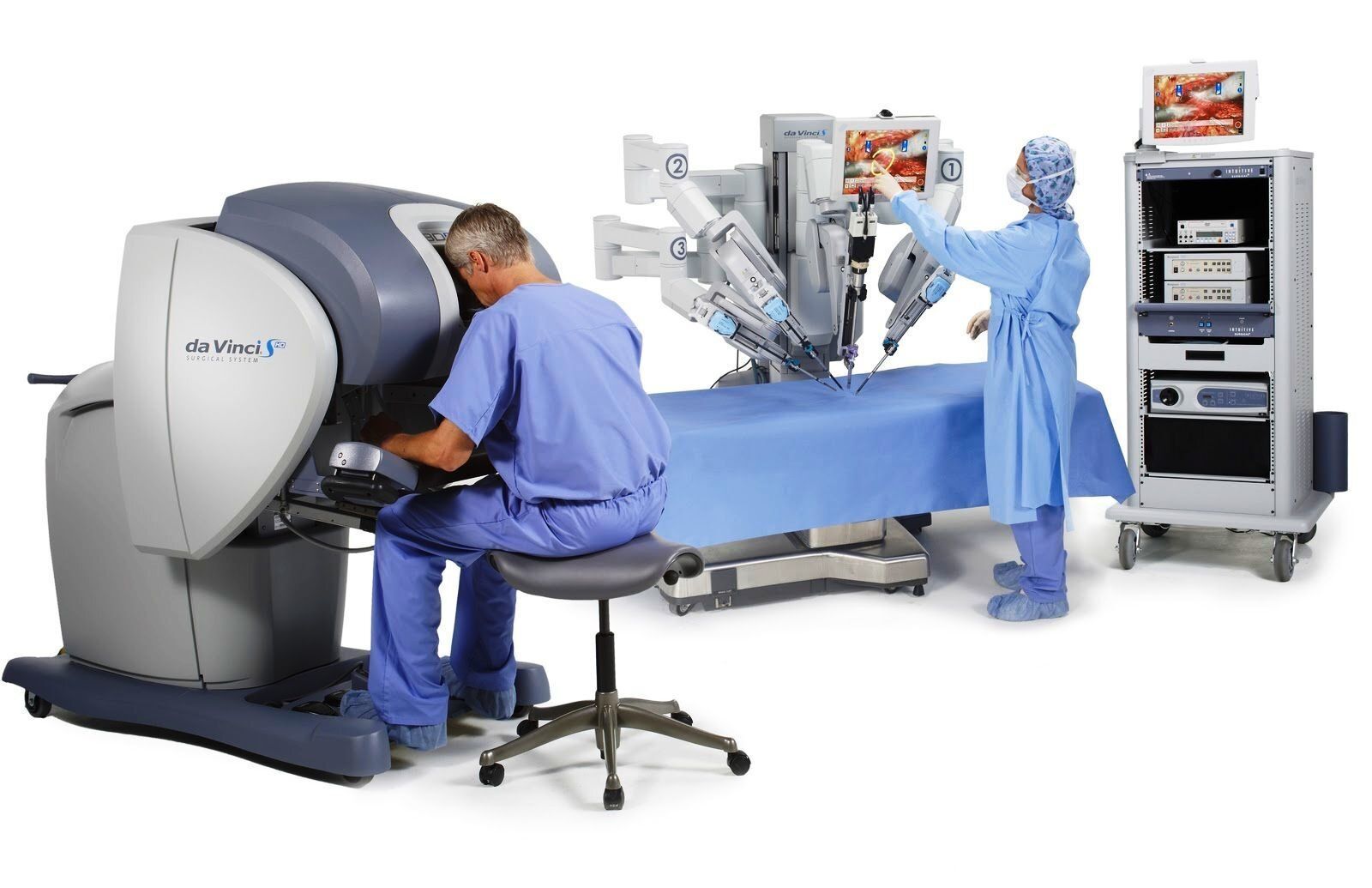


Photo Credits: Medical robotics manufacturers / hospital systems
Modern robotic surgery has been around for years. Systems like the da Vinci platform already allow surgeons to operate with enhanced precision, using robotic arms controlled from a console just a few feet away.
But this is different.
This time, the surgeon wasn’t in the same room.
Not even in the same city.
They were over a thousand miles away.
Every movement of their hands translated into real-time action on the patient’s body. No delay. No hesitation.
That’s the part that matters.
Because even a fraction of a second can be the difference between clean precision and risk.
The Invisible Challenge: Latency
The real enemy here isn’t distance.
It’s delay.
For remote surgery to work safely, systems need:
-
Near-zero latency communication
-
Stable, uninterrupted connectivity
-
Redundant fail-safes in case anything drops
This procedure proved that those systems are finally catching up to the idea.
High-speed networks, including advanced fiber and emerging 5G infrastructure, are making it possible to transmit surgical commands almost instantly.
What used to feel impossible now feels… practical.
Why This Changes Everything
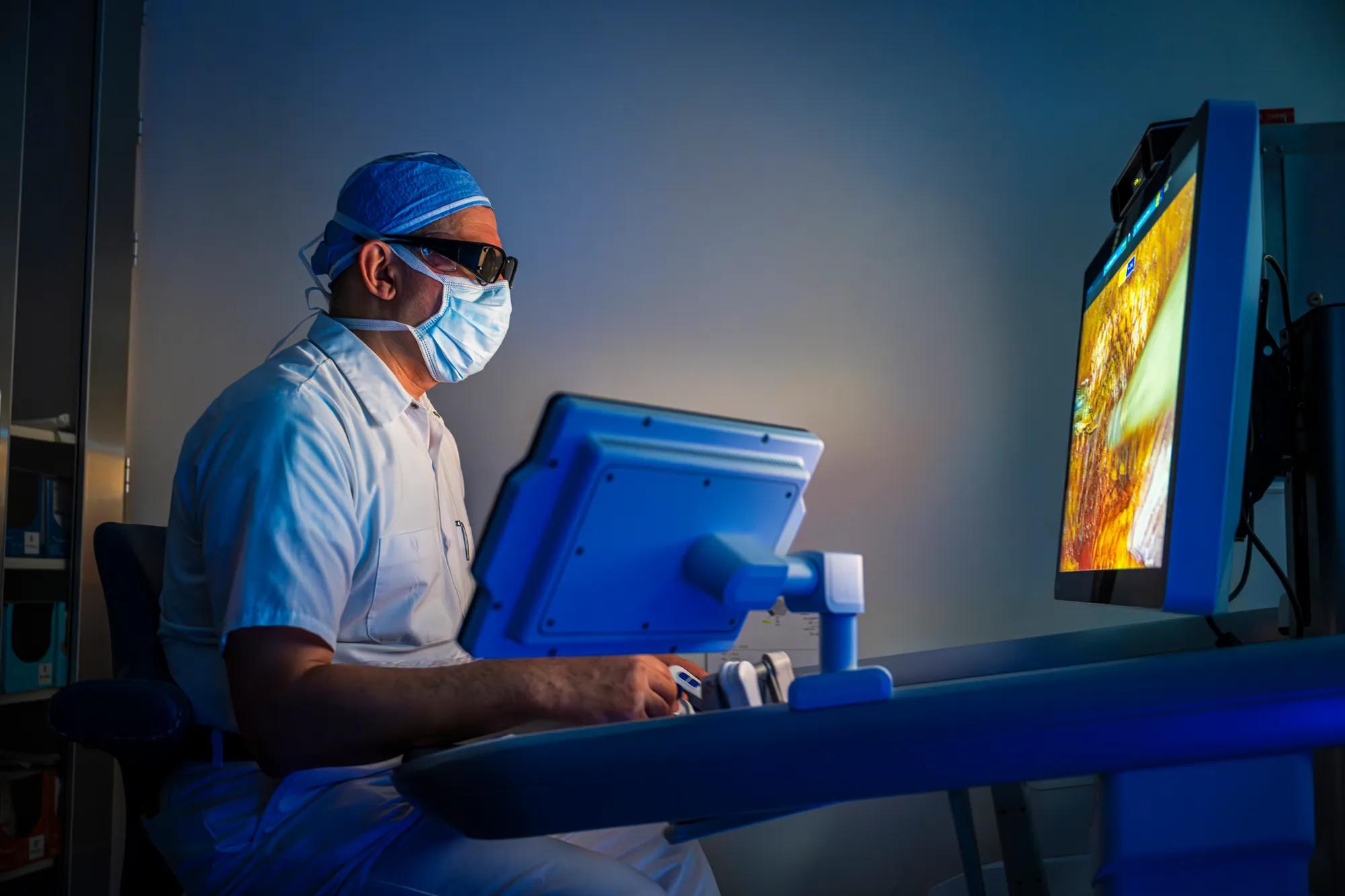


Photo Credits: Medical research institutions
This isn’t just a cool headline.
This changes access.
Imagine:
-
A specialist in one country operating on a patient in another
-
Rural hospitals gaining access to top-tier surgical expertise
-
Emergency procedures performed by the best available surgeon, not just the closest one
Distance has always been one of the biggest barriers in healthcare.
Now it’s starting to disappear.
What Still Needs to Be Solved
Let’s not pretend this is plug-and-play.
There are real challenges:
-
Infrastructure gaps in less connected regions
-
Cost of robotic systems and network reliability
-
Regulatory and licensing across borders
-
Backup protocols if connectivity fails
But here’s the thing.
None of these are impossible problems.
They’re engineering problems. Policy problems. Scaling problems.
The hardest part, proving it works, just happened.
The Human Side of a Machine-Driven Moment
It’s easy to focus on the technology.
Robotic arms. Fiber connections. Control systems.
But the real story is still human.
A surgeon, sitting miles away, trusting the system.
A patient, trusting the surgeon.
A team in the room, bridging both worlds.
That connection is still the core of medicine.
The tools just got better.
FAQ: Remote Surgery Explained
What is remote surgery?
Remote surgery, also known as telesurgery, allows a surgeon to perform procedures on a patient from a different location using robotic systems and real-time communication networks.
How far away was the surgeon in this procedure?
The surgeon operated from over 1,500 miles away, demonstrating that long-distance procedures are now technically possible with modern systems.
Is remote surgery safe?
Early results are promising, but safety depends on ultra-low latency connections, reliable systems, and trained support teams on-site.
What technology makes this possible?
Robotic surgical systems, high-speed internet infrastructure, real-time data transmission, and precision control interfaces all work together to enable remote procedures.
Will this replace traditional surgery?
Not entirely. But it will expand access, especially in remote or underserved areas where specialist surgeons are not physically available.
The Moment That Quietly Redefined Distance
Some breakthroughs are loud.
Rocket launches. Historic landings. Big announcements.
Others happen quietly.
A surgeon sits at a console.
Moves their hands.
And somewhere far away, a life is changed.
No crowd. No countdown.
Just a new reality.
Distance no longer decides who gets the best care.
About Epic Shit

Epic Shit is a collection of practical guides for modern life.
No hacks. No hustle. No pretending life is simpler than it is.
Everything here is built around systems that hold up when motivation fades, plans change, and real constraints show up. If something helps you make fewer unnecessary decisions, travel with less stress, use technology more intentionally, or finish what you start, then it belongs here.
Explore more guides across Life, Travel, Technology, and Creativity.
Epic Shit is built on the idea that good systems matter more than motivation. When life gets loud, plans change, and attention is stretched thin, practical guidance becomes more valuable than perfect advice. Every guide here is designed to reduce friction, support intentional decisions, and help people finish what they start, in travel, technology, creativity, and everyday life.